Content

Sep 21, 2026
Floors Lifting in a New Build? Unsealed Concrete Explained
Robert Scott
3 MIN READ
Why Are Floors Lifting in a New Build?
When you buy a new build, you expect everything to work, so our client was shocked when their brand new floors started lifting soon after they bought the property. Lifting, cupping and bubbling floors are often blamed on poor installation, but moisture is a very common cause. Rather than guess, we pulled up the existing flooring to find out what was happening underneath. The answer was hidden below the surface: the new concrete slab had never been sealed, so moisture was travelling up through the concrete and getting trapped under the flooring, pushing it upward.

How We Fixed the Moisture Problem
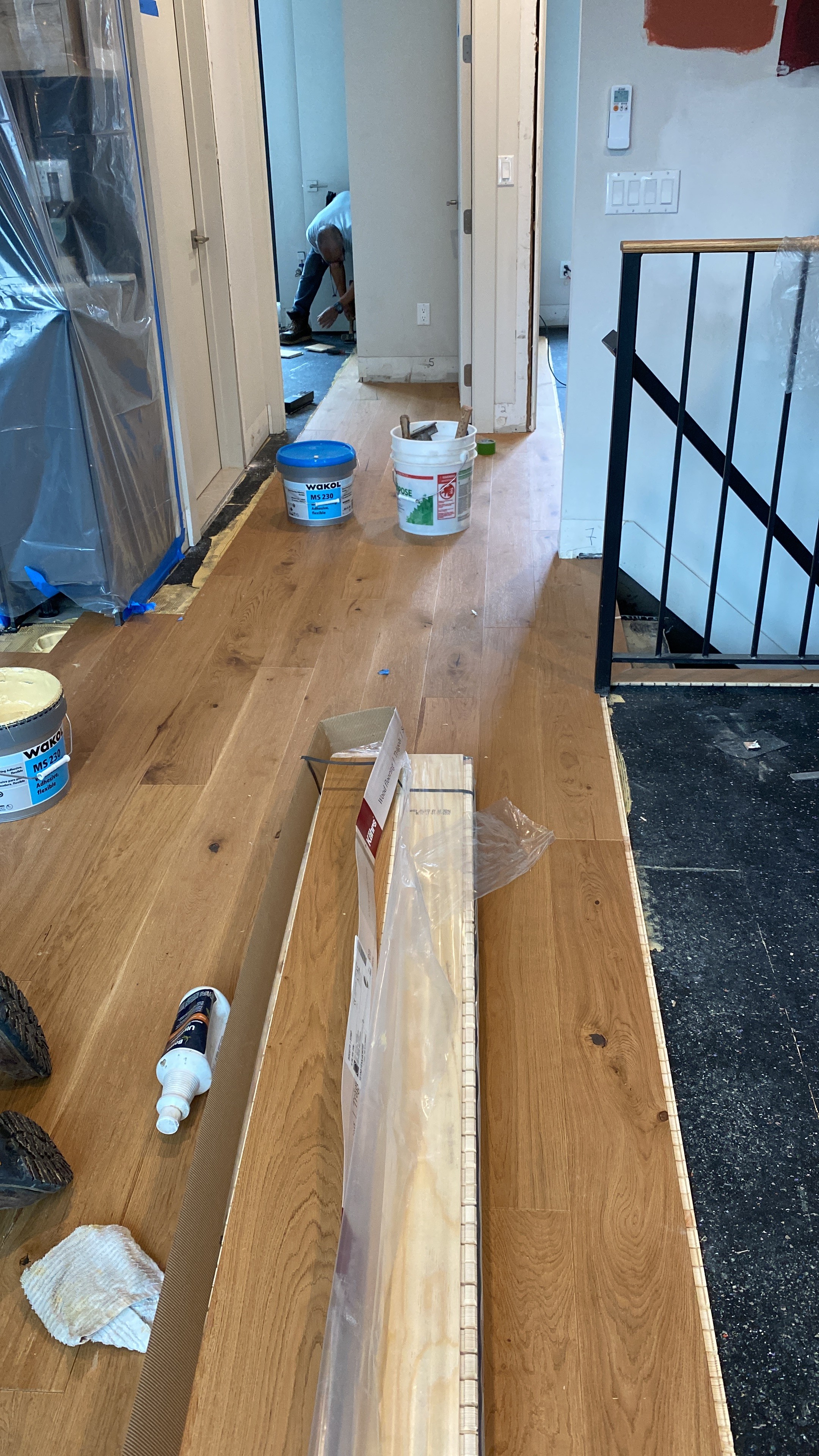
Replacing the boards alone would have repeated the problem, so we started again from the concrete up. We removed all the existing flooring and sealed the concrete to stop moisture rising into the new floor. We then installed self-leveling compound for a flat, even surface, laid Genie Mat sound insulation, and finished with brand new engineered wood flooring throughout. While we were on site, we also installed new lighting and repainted, so the client ended up with a space that looked completely refreshed, not just repaired. A finished floor is only as good as what's underneath it, and the sealing, levelling and underlay decide whether it still looks good years later.

What to Do If Your Floors Are Lifting
If your floors are lifting, don't assume the flooring is at fault. Look for signs of moisture, have the subfloor assessed, and fix the cause before you replace anything. If you're moving into a new build, ask whether the concrete has been sealed and moisture tested before flooring goes down. At Say Construction, we're a licensed general contractor in all five boroughs, working across New York City and Brooklyn, and we always investigate the cause of a problem before recommending a solution. Got a floor problem you can't explain? Get in touch at say-construction.com.